Holding Back Soil That Wants to Move
Retaining wall installation in Greensboro & Summerfield, North Carolina and surrounding areas, for managing slopes, erosion, and drainage on residential properties.
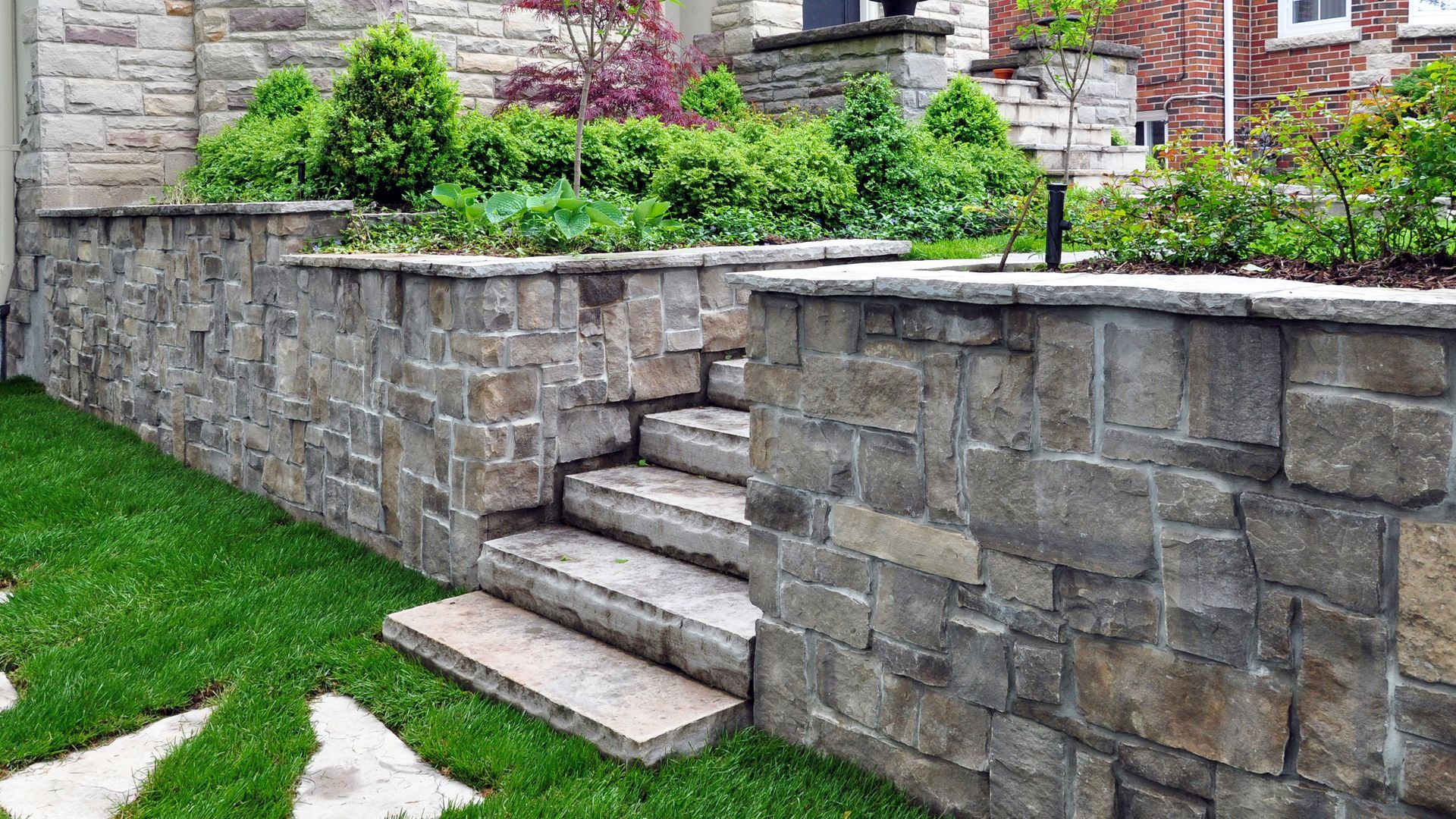
Sloped yards in Greensboro, Jamestown, Brown Summit, Summerfield, NC, or a neighboring community, often send water and soil toward driveways, foundations, or low-lying areas where it causes problems. A retaining wall stops that movement by holding back the soil and redirecting water to safer drainage paths. When a wall is built correctly, it creates a level terrace that can be planted, paved, or used as outdoor living space. Gli Landscaping installs walls that address both the functional need to stabilize slopes and the goal of blending the structure into your landscaping.
This service is designed for properties with elevation changes that cause erosion, limit usable yard space, or create drainage issues. The wall is built with a compacted base, proper backfill, and drainage layers that prevent water from building up behind the structure. Materials are selected based on the height of the wall, soil conditions, and the look you want. Retaining walls also improve safety by reducing the risk of soil slippage near walkways or foundations.
If your yard in Greensboro, Summerfield, NC, and surrounding areas, has a slope that limits how you use the space, request an on-site evaluation to discuss retaining wall options.
What a Properly Built Wall Does for Your Yard
Installation begins with excavating the slope to create a stable foundation below the frost line. In Greensboro, soil type and seasonal rainfall affect how deep the base needs to be and what drainage materials are required. Gli Landscaping installs a compacted gravel base, sets the first course of blocks or stone, and backfills with drainage rock to prevent water pressure from building behind the wall.
Once the wall is complete, you will see a defined edge that holds the soil in place even during heavy rain. Water flows through the drainage layer instead of pooling behind the wall, which prevents bulging or settling. The terrace created by the wall gives you a level area that can support planting beds, seating areas, or additional hardscaping.
Retaining walls also reduce the amount of mulch, soil, and plants that wash downhill after storms. They do not include grading work outside the immediate wall area or landscape planting, but they provide the structural support needed for those elements. The result is a slope that stays in place and a yard that becomes easier to maintain.
Homeowners in Greensboro and Summerfield, NC, often ask about how retaining walls are built, what materials work best, and how the wall will affect drainage and landscaping.
Common concerns before building a retaining wall
Retaining walls perform best when they are built with attention to foundation depth, backfill material, and drainage design suited to the soil and rainfall patterns in your area. If you need to stabilize a slope or create usable terraces in Greensboro, contact Gli Landscaping to schedule an evaluation and discuss materials and layout options.